Summary: If you are a local or service business a good chunk of your leads will come from business profiles such as Google Business, Yelp, Apple Maps and Bing For Places profiles.
Last updated: January 6, 2026
When it comes to local SEO, few things are more critical than business listings. Understanding the importance of business listings in SEO can be the difference between dominating your local market and being completely invisible to potential customers searching for your services. Yet many business owners either ignore their listings entirely or set them up once and never touch them again—a costly mistake that hands customers directly to competitors.
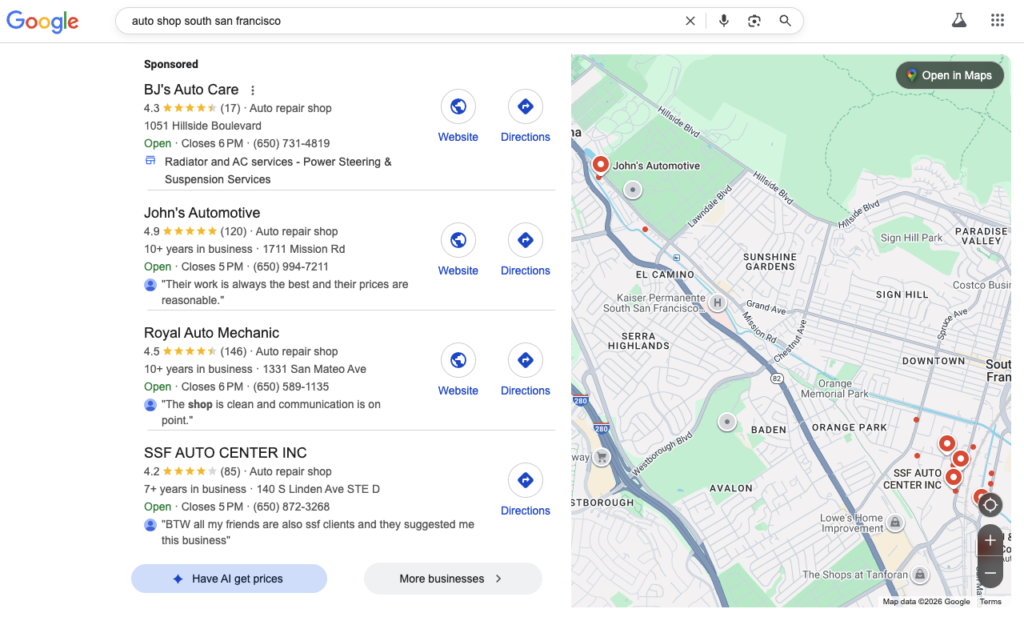
Business listings are the foundation of local search visibility. When someone searches for a service in their area, search engines don’t just look at your website. They pull information from dozens of sources: your Google Business Profile, Bing Places, Apple Maps, Yelp, industry directories, and countless other platforms where your business information appears. The importance of business listings in SEO cannot be overstated—they’re how search engines verify your business exists, where you’re located, and whether you’re trustworthy enough to recommend to searchers.
Let’s explore why business listings matter so much, which platforms you absolutely need to be on, and how to manage them effectively to boost your local search rankings and attract more customers.
What Are Business Listings and Why Do They Matter?
Business listings are online profiles that contain your company’s key information: name, address, phone number, website, hours, services, and other details. These listings exist on search engines (Google, Bing, Apple Maps), review sites (Yelp, Trustpilot), social platforms (Facebook, Instagram), and countless industry-specific directories.
The importance of business listings in SEO stems from how search engines determine local rankings. When someone searches “dentist near me” or “plumber Chicago,” Google doesn’t have a magic crystal ball telling it which businesses are best. Instead, it looks at signals like consistent business information across multiple platforms, review quantity and quality, profile completeness, and how frequently your listing information appears on authoritative websites.
Think of business listings as votes of confidence. When your business appears consistently across 50 different platforms with the same name, address, and phone number, search engines conclude you’re a legitimate, established business. When someone searches for services you offer in your area, you’re much more likely to appear in results because you’ve built that credibility through comprehensive listing management.
Business listings also serve as direct pathways for customers to reach you. Many people never visit your website—they find you in Google Maps, read reviews, see your hours and photos, and call directly from the listing. These platforms have become discovery and conversion channels in their own right, not just SEO tools.
Google Business Profile: The Most Important Listing
If you only optimize one business listing, make it your Google Business Profile (formerly Google My Business). This is the single most important listing for local SEO because Google dominates search. When someone searches for local services, your Google Business Profile determines whether you appear in the coveted local map pack—those three businesses shown with pins on a map at the top of search results.
Your Google Business Profile contains far more than just contact information. You can add dozens of photos showing your work, products, team, and location. You can post updates about specials, events, or news. You can answer common questions in the Q&A section. You can list specific services with descriptions. All of this rich content helps you rank higher while also convincing searchers to choose you over competitors.
The importance of business listings in SEO is perhaps most visible in Google Business Profile’s impact on local pack rankings. Businesses with complete, optimized, actively managed profiles consistently outrank competitors with bare-bones listings. Google rewards businesses that provide comprehensive, helpful information because it makes Google’s search results more useful.
Reviews on your Google Business Profile are particularly crucial. They’re both a ranking factor and a conversion factor. Businesses with lots of recent, positive reviews rank higher in local search, and searchers are far more likely to click on listings with strong review profiles. Actively generating and responding to reviews should be a core part of your listing management strategy.
Bing Places and Microsoft’s Growing Search Presence
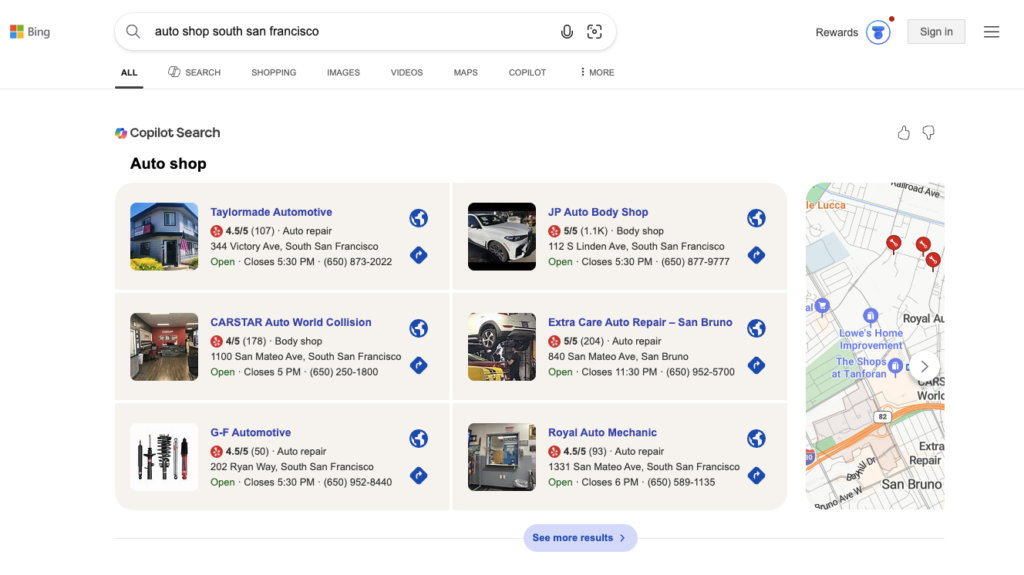
While Google dominates search, Bing Powers about 10-15% of searches in the U.S.—and its market share is growing, especially with Microsoft’s integration of AI into Bing. Ignoring Bing Places means ignoring a significant chunk of potential customers, particularly in certain demographics and industries where Bing has stronger presence.
Bing Places for Business works similarly to Google Business Profile. You claim your listing, verify your business, and fill out comprehensive information about your company. The good news is that if you’ve already optimized your Google Business Profile, most of that work transfers easily to Bing Places. The platforms require similar information and respond to the same optimization principles.
One advantage of Bing Places is less competition. Because fewer businesses actively optimize their Bing listings, you can often achieve top rankings more easily than on Google. For businesses in competitive industries, this provides an opportunity to capture market share that competitors are ignoring. Every customer counts, and the customers finding you through Bing are just as valuable as those from Google.
Bing also has interesting partnerships and integrations. Bing powers search for various platforms and voice assistants, meaning your Bing Places listing can surface in more places than just Bing.com. Optimizing for Bing extends your reach across Microsoft’s ecosystem.
Apple Maps and the iOS Advantage
Apple Maps is the default mapping application on iPhones, iPads, and Macs—devices used by millions of people, often in higher income brackets. When iPhone users search for businesses using Siri, Maps, or Safari, Apple Maps results appear. If your business isn’t listed or your listing is incomplete, you’re invisible to this enormous user base.
Apple Maps Connect is where you manage your Apple Maps business listing. Like other platforms, you’ll provide your basic business information, categories, hours, and photos. Apple also allows you to add special attributes like whether you offer delivery, accept reservations, or have outdoor seating—details that help customers make informed decisions.
The importance of business listings in SEO extends to Apple’s ecosystem because Apple is increasingly integrating Maps data into search and voice queries. When someone asks Siri “where’s the nearest coffee shop,” Siri pulls from Apple Maps data. Businesses with optimized Apple Maps listings have a significant advantage in these queries.
One unique aspect of Apple Maps is its integration with Apple Pay and other Apple services. This seamless integration can improve customer experience and conversion rates, particularly for retail and food service businesses. Making it effortless for customers to pay, get directions, or make reservations directly from your listing removes friction from the customer journey.
Local Citations and Directory Listings
Beyond the major platforms, citations—mentions of your business name, address, and phone number on other websites—are fundamental to local SEO. Citations build the web of information that search engines use to verify your business and determine your relevance for local searches.
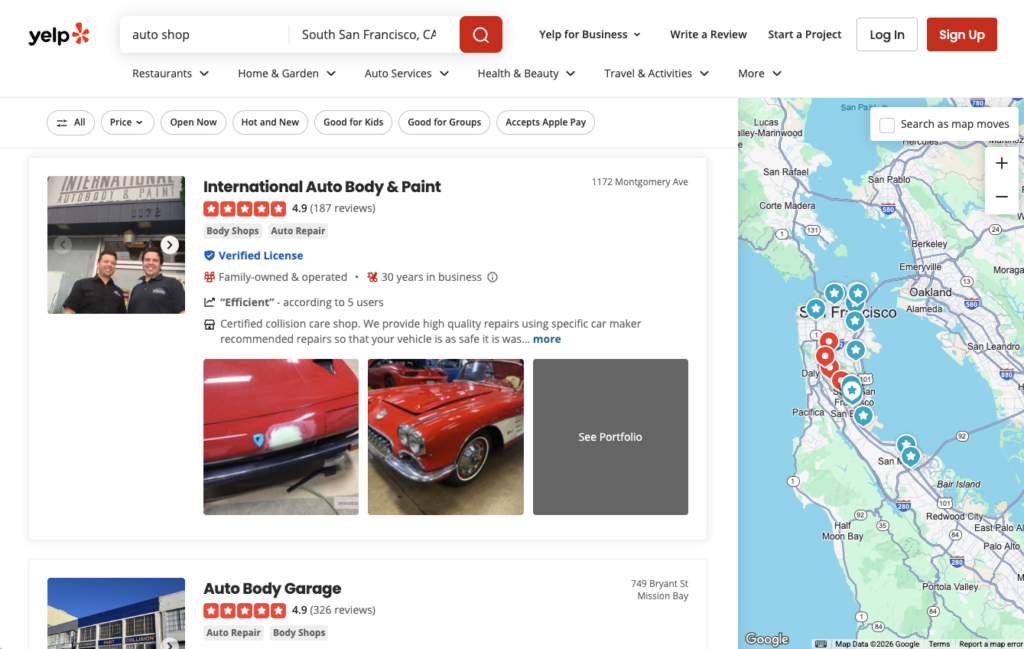
Citations appear on general directories like Yelp, Yellow Pages, Better Business Bureau, and Foursquare, as well as industry-specific directories relevant to your business type. Lawyers should be on Avvo and Justia. Restaurants should be on OpenTable and TripAdvisor. Contractors should be on Angi and HomeAdvisor. These targeted citations carry particular weight because they signal industry relevance.
The critical factor with citations is consistency. Your business name, address, and phone number must be identical across all platforms. Even small variations—like “St.” versus “Street” or including/excluding a suite number—confuse search engines and dilute the SEO value of your citations. This is called NAP consistency (Name, Address, Phone), and it’s non-negotiable for effective local SEO.
Building citations manually is time-consuming but important. Start with the major platforms everyone should be on, then expand to industry-specific directories. Services like BrightLocal, Yext, or Whitespark can help automate citation building and monitoring, though manual verification ensures accuracy. The importance of business listings in SEO means this tedious work pays dividends through improved rankings and visibility.
Industry-Specific Listing Platforms
Every industry has specialized platforms where customers search for services. These industry-specific listings are often more valuable than general directories because they attract highly qualified traffic—people specifically looking for what you offer.
For healthcare providers, platforms like Healthgrades, Zocdoc, and Vitals are crucial. Patients research doctors extensively online, and profiles on these platforms build credibility while improving SEO. For legal services, Avvo, Lawyers.com, and Justia provide visibility to potential clients researching attorneys.
Home service businesses should prioritize Angi (formerly Angie’s List), HomeAdvisor, Thumbtack, and Porch. These platforms not only provide citations but also generate leads directly. Restaurants need profiles on Yelp, TripAdvisor, OpenTable, and food delivery platforms like DoorDash and Uber Eats, which customers use for discovery and ordering.
Real estate agents need Zillow, Realtor.com, and Trulia profiles. Hotels and hospitality businesses need TripAdvisor, Booking.com, and Expedia listings. Retailers benefit from Google Shopping, Facebook Shops, and industry marketplaces relevant to their products.
The key is identifying which 5-10 platforms matter most for your specific industry and ensuring your listings on those platforms are complete, accurate, and actively managed. These industry-specific listings often convert at higher rates than general directories because visitors have strong intent to find businesses exactly like yours.
Social Media Profiles as Business Listings
Social media profiles function as business listings and contribute to your overall SEO presence. Your Facebook Business Page, LinkedIn company page, Instagram profile, and other social accounts contain your business information and link back to your website. Search engines crawl and index this information as part of your overall online footprint.
Facebook is particularly important for local businesses because Facebook Business Pages appear in both Google and Facebook search results. A complete Facebook page with accurate contact information, regular posts, reviews, and check-ins signals to search engines that you’re an active, legitimate business. Facebook’s massive user base also makes it a discovery platform where potential customers might find you through friends’ activity or local searches.
LinkedIn company pages matter more for B2B service businesses, professional services, and any business targeting other businesses as customers. A professional, complete LinkedIn presence builds credibility and contributes to your overall digital authority. LinkedIn also has powerful search functionality, making it a platform where potential clients might discover you directly.
Instagram’s location tags and business profiles create additional signals about your location and business type. When customers tag your location in posts, it creates user-generated content that reinforces your local presence. Instagram is particularly valuable for visually-driven businesses like restaurants, retailers, salons, and contractors whose work photographs well.
Managing Business Listing Consistency
Maintaining consistency across dozens of business listings seems overwhelming, but it’s essential. Inconsistent information confuses search engines, dilutes your SEO power, and frustrates customers who encounter outdated hours or wrong phone numbers.
Start by creating a master document with your official business information: exact business name (including any LLC or Inc.), complete address with correct abbreviations, primary phone number, website URL, and business description. This becomes your source of truth for all listings. Every platform should match this document exactly.
Regular audits are crucial. At least quarterly, search for your business name and location to see what listings appear. Check each one for accuracy and completeness. Look for duplicate listings (these confuse search engines and should be merged or removed). Update any changes to your business information across all platforms simultaneously.
Tools can help manage this complexity. Platforms like Moz Local, BrightLocal, Yext, and Whitespark offer listing management services that distribute your information across multiple platforms and monitor for inconsistencies. While these cost money, they save enormous time and ensure consistency that might be impossible to maintain manually.
When you change your business information—move locations, change phone numbers, rebrand, or alter hours—update every single listing immediately. Having old information on even a few platforms can hurt your SEO and cause you to lose customers who get frustrated trying to reach you with outdated contact details.
How Business Listings Impact Local Search Rankings
The importance of business listings in SEO becomes clear when you understand how search engines rank local results. Google’s local search algorithm considers three main factors: relevance, distance, and prominence. Business listings impact all three.
Relevance means how well your business matches what the searcher is looking for. Complete listings with detailed service descriptions, properly selected categories, and keyword-rich content signal relevance. If your Google Business Profile lists specific services, uses relevant categories, and includes detailed business descriptions, Google can better match you to relevant searches.
Distance is straightforward—how close you are to the searcher or the location they searched for. Your business listings provide the location data search engines use to determine this. Accurate, consistent address information across all platforms ensures search engines correctly understand where you’re located and which geographic searches you’re relevant for.
Prominence refers to how well-known and authoritative your business is. This is where the quantity and quality of your business listings really matter. Businesses with listings on 50+ platforms, strong review profiles, lots of photos, and regular updates signal prominence. Search engines interpret this widespread presence as an indicator that you’re an established, trustworthy business worthy of top rankings.
Reviews across your various business listings also contribute heavily to local rankings. Google doesn’t just look at Google reviews—it considers your overall online reputation across multiple platforms. A business with strong reviews on Google, Yelp, Facebook, and industry directories will outrank a competitor with reviews only on one platform.
Common Business Listing Mistakes to Avoid
One of the biggest mistakes is claiming your listings but never optimizing them. A bare-bones listing with just your name, address, and phone number is barely better than no listing at all. Complete profiles with photos, descriptions, services, hours, and all available fields rank dramatically better and convert at higher rates.
Another critical error is ignoring review management. Businesses that don’t actively generate reviews or respond to the ones they receive miss a massive opportunity. Reviews are both a ranking factor and the primary way customers evaluate whether to choose you. Having few reviews or old reviews signals to both search engines and customers that you’re not active or not good enough to generate positive feedback.
Inconsistent NAP information is perhaps the most damaging mistake. When your address is slightly different on Google versus Yelp versus Facebook, search engines don’t know which one is correct. This confusion dilutes your local SEO power and can even cause you to rank for the wrong location. Consistency is absolutely critical.
Some businesses also make the mistake of creating duplicate listings, either intentionally or accidentally. Multiple Google Business Profiles for the same business location confuses Google and violates their guidelines. If you discover duplicates, work to merge or remove them immediately.
Finally, many businesses set up their listings once and never update them. Business information changes—new services, different hours, additional photos, special offers—and your listings should reflect current information. Active management signals to both search engines and customers that you’re a thriving business worth engaging with.
The Ongoing Value of Business Listing Management
Understanding the importance of business listings in SEO is just the first step. Actually maintaining and optimizing these listings requires ongoing attention, but the return on investment is exceptional. Businesses that commit to comprehensive listing management see measurable improvements in local search rankings, website traffic, phone calls, and ultimately revenue.
The compound effect of business listings becomes more valuable over time. As you build more citations, generate more reviews, add more photos, and establish more presence across platforms, each additional element reinforces the others. Your overall digital footprint grows stronger, making you increasingly difficult for competitors to displace.
Business listings also provide a defensive moat around your online reputation. When you control and actively manage your listings, you can respond quickly to reviews, correct misinformation, and shape the narrative about your business. Businesses that neglect their listings leave their reputation vulnerable to outdated information, competitor sabotage, and unaddressed negative reviews.
Perhaps most importantly, comprehensive business listing management future-proofs your local visibility. As search evolves with AI, voice search, and new platforms, the fundamental principle remains: businesses with comprehensive, accurate, well-maintained information across multiple authoritative platforms will continue to outperform competitors who neglect this foundation.
Is your business losing customers because your listings are incomplete, inconsistent, or invisible? Our local SEO services include comprehensive business listing management across all major platforms. Let’s get your business found everywhere customers are searching.
How to Do Keyword Research in 2026: Complete Guide for Small Businesses
Keyword research is the foundation of SEO success—but most small business owners either skip it…
Similar Software to SEO Clarity: Affordable Alternatives for Small Businesses
If you’re searching for similar software to SEO Clarity, chances are you’ve just experienced serious…
Best SEMrush Alternatives in 2026: Affordable SEO Tools That Actually Work
If you’re searching for the best SEMrush alternatives, you’re probably experiencing one of two things:…
Hotel Email Marketing Software: Why Sender.net is the Perfect Solution for Hotels
Summary: Looking for reliable hotel email marketing software? Sender.net offers hotels everything needed to automate…

How Do I Get More Customers? 10 Proven Strategies for Small Businesses in 2026
Summary: Wondering: “How Do I Get More Customers in 2026?” This comprehensive guide reveals 10…

Best Website Builder for Nonprofit Organizations: Free and Discounted Options in 2026
Summary: Nonprofits operate on tight budgets, making expensive website builders impractical. This guide reviews the…